Marketing Materials
Build a print kit for your next trade show
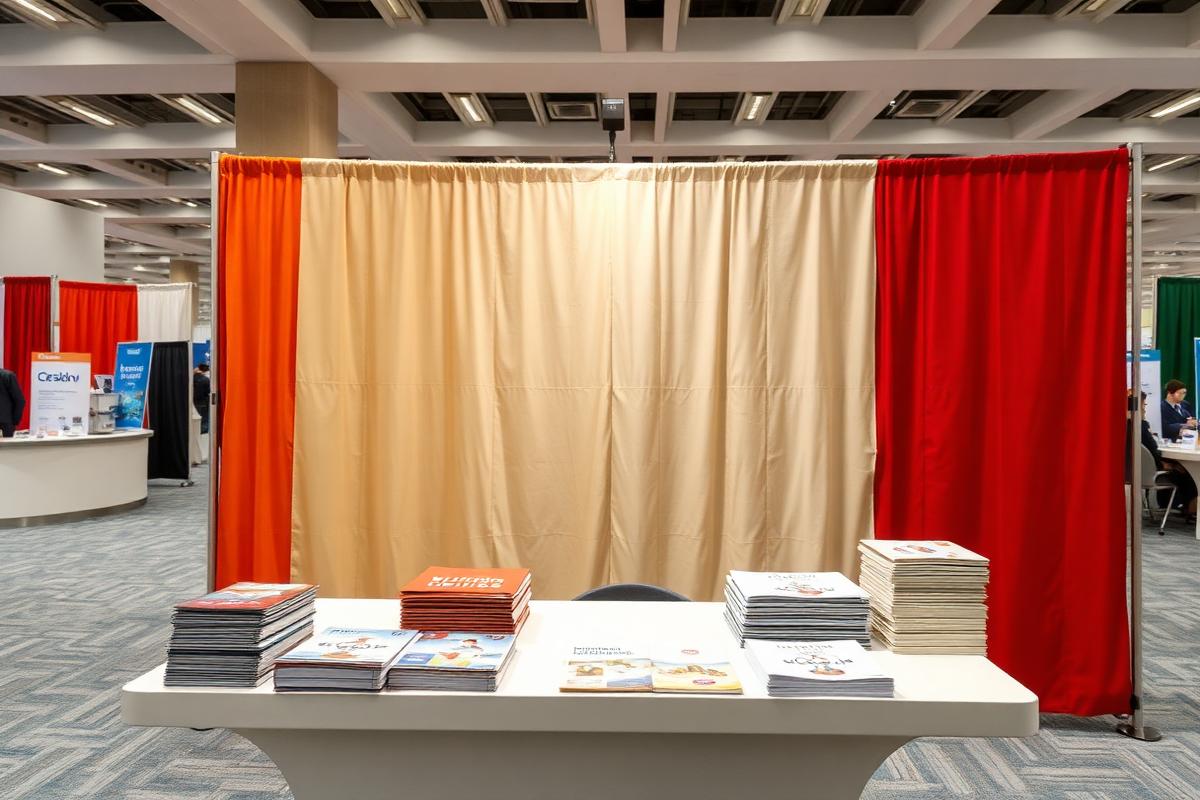
Trade shows compress months of sales activity into a few crowded days. Visitors move fast, attention is scarce, and the booths that win aren't necessarily the biggest — they're the ones that make it easy to understand the offer, remember the brand, and take the next step.
A thoughtful print kit does most of that heavy lifting. It gives your team consistent things to hand out, gives visitors something concrete to take home, and gives your booth a polished, prepared feel even before anyone speaks.
The core pieces every booth needs
Business cards are non-negotiable. Every person working the booth should have plenty, and everyone's card should match — same stock, same layout, same finish. Mismatched cards signal a mismatched team.
A one-page flyer or sell sheet is the workhorse. It explains what you do, who it's for, and how to take the next step, in a format that fits into a tote bag without folding awkwardly. Keep it to one page; anything longer usually goes unread.
A short brochure (bifold or trifold) is worth adding if your offer has multiple products or service tiers. Use it to walk through the buying decision, not to list every feature.
Product sheets or spec sheets support technical conversations. They give the visitor's engineer, buyer, or approver something concrete to review after the show.
Signage and booth presence
A retractable banner behind the booth acts as your headline. The person walking by should understand what you offer without breaking stride. Lead with the value, not the company name.
Table throws, tablecloths, and branded runners make the booth feel finished. Bare tables and hotel-supplied linens read as an afterthought and pull focus away from the pieces you actually want people to notice.
Directional signage — small standing cards on the table pointing to a demo, a giveaway, or a sign-up — helps guide visitor behavior without your team having to repeat the same lines all day.
Give-aways worth handing out
The best branded give-aways are useful, portable, and relevant. Notebooks, pens with real ink, quality tote bags, and phone stands consistently outperform stress balls and keychains because they survive the trip home.
Whatever the item, brand it clearly but not obnoxiously. A subtle logo on a well-made object earns weeks of use; a loud logo on a cheap object gets tossed at the airport.
Pair the give-away with a printed card explaining what to do next. The item earns the attention; the card converts it into a real follow-up.
Consistency is the whole point
The trade show print kit is not the place to experiment with new brand directions. Every piece — cards, flyers, banners, brochures, give-aways — should share the same color palette, typography, and voice.
Consistency signals maturity. A booth where everything matches feels like an established company; a booth where every piece looks slightly different feels improvised, even if the actual products are excellent.
Build the kit once, use it across the season, and refresh it annually rather than piece-by-piece. That discipline pays off in both cost and brand recognition.
Frequently asked questions
- How many flyers should I bring to a trade show?
- A safe rule is one flyer for every three expected booth visitors, plus a 20% cushion. It's better to run slightly over than to run out on day one.
- Are digital-only booths a good alternative to printed materials?
- QR codes and digital follow-ups are useful, but printed materials still outperform for on-the-spot recall. Most successful booths use both: printed pieces for the moment, digital for the follow-up.