Trade Shows
Trade Show Handouts That Don't End Up in the Trash
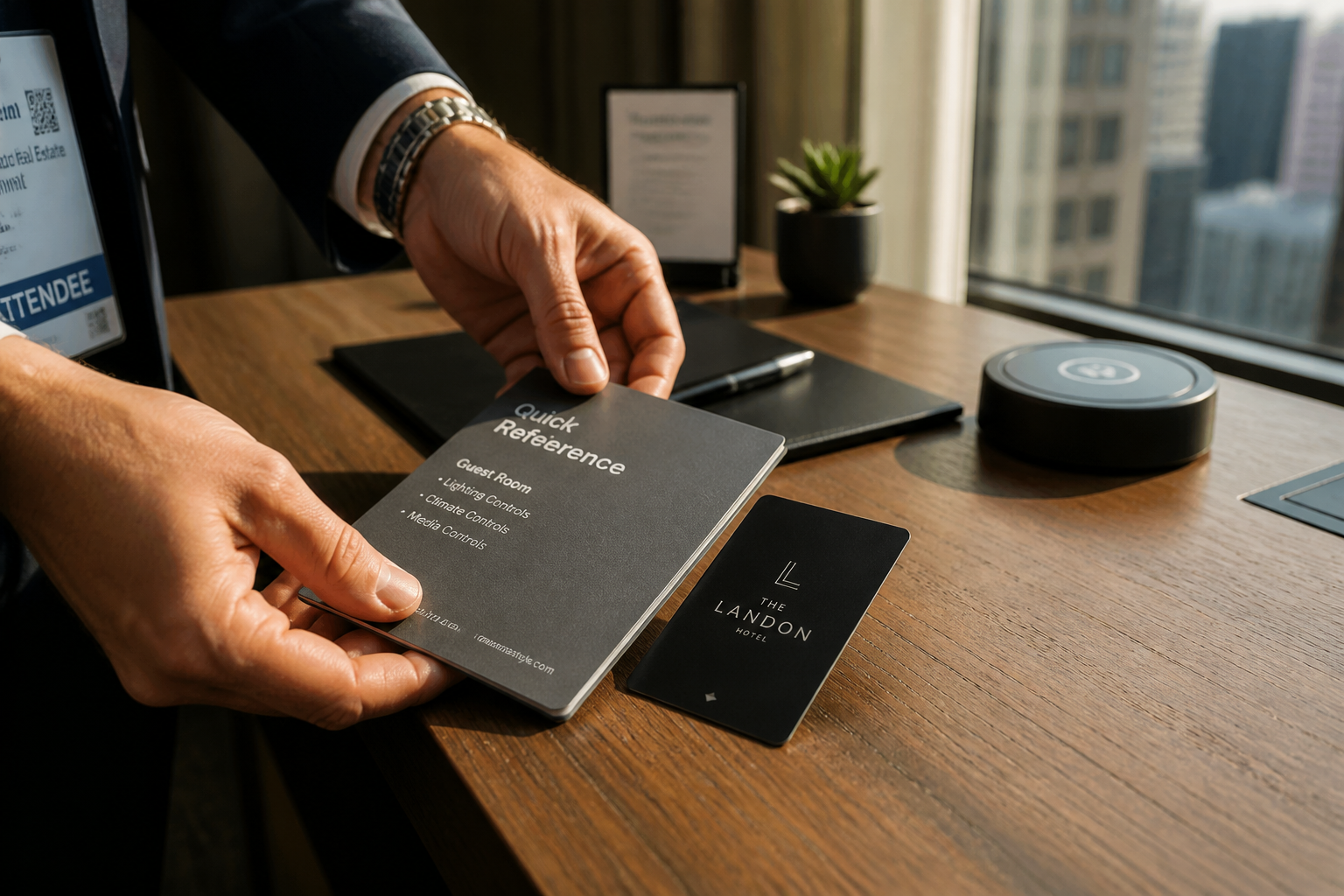
Walk the floor of any major convention center at four o'clock on the final afternoon, and the scene is always the same. Blue recycling bins near the exits overflow with glossy flyers, product catalogs, and cheap promotional trinkets. Attendees accept collateral throughout the day out of politeness, but when it comes time to pack a carry-on or walk to the parking garage, they aggressively purge anything that adds weight without providing clear value.
For exhibitors, every discarded sheet of paper represents wasted design time, misallocated print budgets, and missed sales opportunities. Getting collateral to survive the journey from the booth to the attendee's office requires rethinking both the physical format and the functional utility of what you distribute. If your handout does not solve a problem, fit easily into a pocket, or offer a frictionless digital bridge, it will not survive the walk to the car.
Why Standard Sell Sheets Fail at the Exit Door
The standard trade show handout is an 8.5 by 11-inch flat sheet printed on 80-pound text stock. It usually features a hero image, three bullet points about company history, and a generic contact email. This format fails because it demands immediate reading while offering no immediate utility. Attendees collect dozens of identical sheets within two hours. By mid-afternoon, these loose papers are crumpled, disorganized, and heavy.
Standard sheets also present a physical handling problem. Unless an attendee is carrying a rigid tote or portfolio, letter-sized paper bends, tears, and quickly looks like trash. Once an item looks damaged, the psychological hurdle to throwing it away disappears. To keep your materials out of the bin, you must avoid creating fragile, oversized documents that place the burden of organization on the recipient.
Finally, most sell sheets focus entirely on the vendor rather than the buyer. An overview of your corporate hierarchy or a list of features means nothing to a tired attendee scanning their haul at the end of the day. Collateral survives when its primary content helps the buyer do their job better, regardless of whether they make an immediate purchase.
Replace Company Overviews with High-Value Reference Tools
If you want someone to keep your print materials, design them as reference tools rather than sales pitches. Instead of printing a traditional brochure, print an industry cheat sheet, a regulatory compliance checklist, a sizing matrix, or a troubleshooting flow chart. When a handout answers a complex question that your target customer faces regularly, it transitions from disposable marketing collateral into a permanent desk resource.
For example, a logistics provider might hand out a durable card outlining standard freight pallet dimensions, weight thresholds, and customs clearance checklists. An IT vendor might distribute a clean diagram mapping common network architecture bottlenecks. In both cases, the vendor's branding, web address, and contact details remain visible, but the primary real estate is dedicated to objective, practical information.
To reinforce this reference value, consider the print substrate. A checklist printed on standard paper still feels temporary. That same checklist printed on synthetic, tear-proof stock or heavy 16-point cardstock with a scuff-resistant matte lamination immediately signals durability. The recipient subconsciously recognizes that the piece was built to last, making them far less likely to throw it away.
Bridge Physical and Digital with Custom PVC and NFC Cards
One of the cleanest ways to ensure your information survives the show floor is to shrink the physical footprint while expanding the digital payload. Thick PVC cards—similar to standard credit cards—have an exceptionally high retention rate. They slip into a wallet or badge holder without bending, taking up zero luggage space.
By embedding near-field communication (NFC) chips into custom-printed PVC cards, you turn a single physical object into a portal for your entire product catalog, demonstration videos, or scheduling link. An attendee taps the card against their smartphone, and your target landing page opens instantly in their mobile browser, bypassing the friction of typing long URLs or digging through email inboxes.
This approach solves the core logistical issue of trade shows: attendees want access to detailed information, but they do not want to carry 20-page booklets across three days of walking. An NFC-enabled card offers the permanence and premium feel of a physical exchange, paired with the lightweight convenience of digital delivery. For teams managing frequent event appearances, printing dedicated smart cards or encoding them on demand with an in-house badge printer keeps the per-contact cost low while elevating the exchange.
Tactile Quality Creates Perceived Value
Human beings evaluate physical objects through touch long before they read the headline. Light, flimsy paper sends a clear signal: this material is temporary, cheap, and easily replaced. Heavy, textured stocks communicate authority, permanence, and investment. If your budget only allows for standard business cards or rack cards, allocating funds toward heavier paper stock is the single most effective way to prevent discards.
Upgrading from a standard 14-point cardstock to an ultra-thick 24-point or 32-point card completely changes the tactile experience. Adding specialty finishes, such as a soft-touch laminate or targeted spot UV coating over key technical diagrams, invites the recipient to hold the piece longer. That extra second of physical engagement is often the difference between slipping the card into a pocket or tossing it into a wastebasket.
Finishing choices should align with your brand positioning. A high-end manufacturing or technology firm benefits from clean, rigid cards with sharp edges and protective laminates that resist fingerprints. A sustainable goods brand might opt for an uncoated, heavy kraft or textured linen sheet. The goal is not decoration for its own sake, but using physical weight to create an unconscious perception of value.
Design for Pockets, Not for Tote Bags
Physical dimensions dictate where an item goes once an attendee leaves your booth. Large brochures and presentation folders end up in tote bags alongside dozens of competing pieces. Items that fit directly into a pocket, a jacket interior, or a phone case stay on the person, dramatically increasing the odds that they make it back to the hotel and into the office.
Consider non-traditional form factors such as pocket-sized accordion folds, slim rack cards (4 by 9 inches), or custom die-cut cards that match standard passport dimensions. An accordion-folded guide can hold an impressive amount of technical data, diagrams, and case summaries, yet it folds down to the size of an index card.
When planning your print order, measure your materials against real-world trade show behavior. If an attendee cannot easily slide your handout into their back pocket while holding a coffee in one hand and their phone in the other, the design is working against you. Build for convenience, portability, and instant stowing.
Frequently asked questions
- How much collateral should I print for a typical industry trade show?
- A reliable baseline is to print enough materials for 15 to 25 percent of the total projected event attendance, adjusted for your booth staffing capacity. If you switch to high-value items like PVC smart cards or pocket reference guides, you will distribute fewer total pieces because your staff can qualify conversations before handing them out.
- Are QR codes as effective as NFC chips for booth handouts?
- QR codes are universally understood and cost nothing extra to print, making them a practical choice for visual print collateral. However, NFC chips provide a faster, more modern interaction that requires no camera scanning, and PVC NFC cards are far more likely to be retained in an attendee's wallet than a paper card with a standard code.
- What paper finish holds up best inside an event environment?
- Matte and soft-touch laminations offer the best durability under trade show conditions. They resist scuffing, hide fingerprint oils from repeated handling, and eliminate the intense overhead glare typical of convention center lighting.