Business Cards
NFC Business Cards: How They Work, Who Benefits, and Their Limits
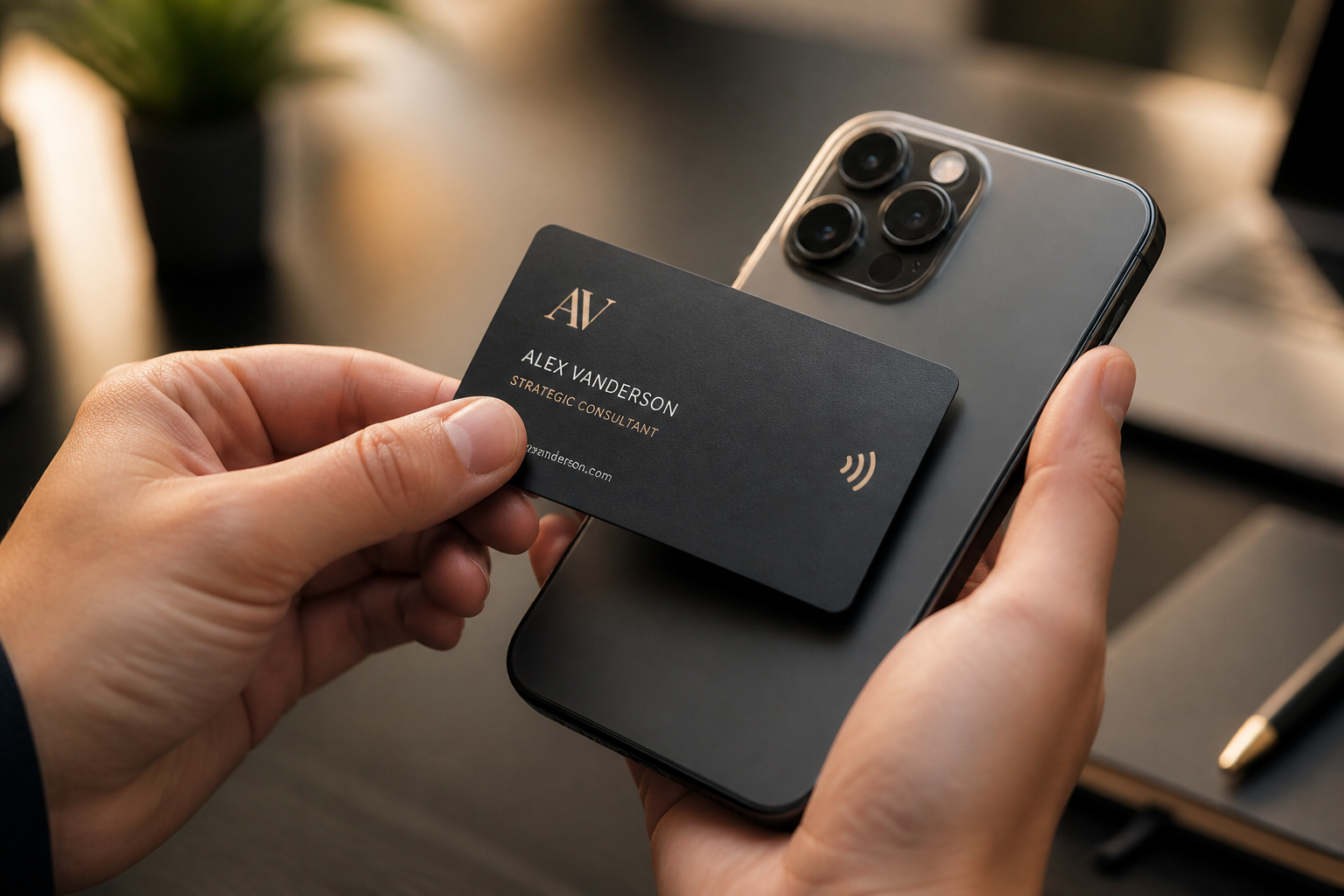
In an increasingly digital professional landscape, traditional business cards remain a staple for initial introductions. However, a newer iteration, the NFC business card, offers a more interactive and dynamic exchange of contact information. These cards leverage Near Field Communication technology to transfer data wirelessly with a simple tap, bridging the gap between physical networking and digital connectivity.
Understanding NFC business cards involves more than just knowing they can share information. It requires comprehending the underlying technology, evaluating their practical applications for various professions, and acknowledging their current limitations. This article outlines the operational mechanics of NFC cards, identifies key user groups, and provides an honest assessment of their advantages and disadvantages.
The Mechanism: How NFC Business Cards Function
NFC business cards contain a small, unpowered NFC chip and antenna embedded within the card material. This chip stores a small amount of data, typically a link to a digital profile, contact information, or a specific URL. When brought within a few centimeters of an NFC-enabled device, such as a smartphone, the chip is inductively powered by the smartphone's NFC reader. This powers the chip enough to transmit its stored data.
The smartphone then interprets this data. In most cases, it prompts the user to open a web link, save a contact, or perform another predefined action. The card itself does not require a battery or external power source, nor does it connect to the internet directly. Its functionality relies entirely on the proximity and capabilities of the receiving device.
Key Use Cases: Beyond Basic Contact Exchange
The primary use case for an NFC business card is efficiently sharing contact details. Instead of typing information or scanning a QR code, a simple tap can direct a new connection to a LinkedIn profile, a VCF card for direct saving, or a personalized landing page. This reduces friction and potential errors during information transfer, enhancing the professionalism of the exchange.
Beyond contact information, NFC cards can serve as interactive marketing tools. Professionals can program their cards to link directly to a portfolio, a booking page, a product demo video, or a specific marketing campaign. For instance, a real estate agent could link to a virtual tour of a property, or a consultant could direct prospective clients to a client testimonial page. This allows for a more comprehensive and engaging introduction than a static paper card.
The data on the NFC chip can also be updated remotely if linked to a dynamic online profile. This means changes to phone numbers, job titles, or portfolio links do not necessitate printing new cards. This adaptability offers a significant advantage in terms of cost and resource efficiency over time, especially for professionals whose details might change frequently.
Who Benefits Most from NFC Business Cards?
Professionals in technology, marketing, sales, and creative industries are strong candidates for NFC business cards. Those who regularly attend conferences, trade shows, or networking events can leverage the speed and novelty of the technology to make a memorable impression. Anyone whose professional narrative benefits from immediate digital access to their work or a specific call to action can find value in these cards.
Small business owners and entrepreneurs can also benefit. For a business seeking to project innovation or efficiency, an NFC card aligns with that brand image. It provides a modern touchpoint that can differentiate them from competitors, particularly in service-oriented industries where personal connection and cutting-edge presentation are valuable. For instance, a custom software developer or a digital marketing agency would find an NFC card to be a natural extension of their brand.
Honest Limitations and Considerations
While NFC business cards offer distinct advantages, they are not without limitations. The most significant is the reliance on NFC-enabled receiving devices. While most modern smartphones support NFC, older models or certain budget devices may not. This means some contacts might not be able to interact with the card via tap, necessitating a fallback method such as a printed QR code or traditional manual entry. A card that requires a tap should always include a visible QR code for universal compatibility.
Another consideration is the potential for data privacy concerns. While the cards themselves typically only store a link or static text, linking to a dynamic online profile means that profile's security and privacy settings must be carefully managed. Users should ensure their linked profiles do not inadvertently expose sensitive personal or professional information.
Finally, the perceived value and adoption rate of NFC technology among the general public are still evolving. While the "tap" feature is intuitive, some individuals may still be unfamiliar with it or hesitant to engage with a new technology. The novelty factor can be a benefit, but it also requires a brief explanation during the exchange, which may slightly prolong the interaction compared to simply handing over a paper card.
Frequently asked questions
- Can I update the information on my NFC business card after it's printed?
- If your NFC card links to a dynamic online profile or a cloud-based URL, you can typically update the content at that URL without needing to print new cards. The data stored directly on the card's chip is usually static, but linking to an editable online resource provides this flexibility.
- Do NFC business cards require a special app to work?
- Most modern smartphones do not require a special app to read basic NFC tags or open web links. The phone's native NFC reader will typically prompt the user to open the embedded URL in their web browser or save contact information directly. However, some advanced NFC applications might benefit from dedicated apps.
- Are NFC business cards more expensive than traditional paper cards?
- Yes, NFC business cards are generally more expensive per unit than standard paper cards due to the integrated NFC chip and specialized printing processes. However, the ability to update linked information remotely can reduce long-term reprinting costs compared to paper cards for frequently changing details.