Direct Mail
EDDM vs. Targeted Direct Mail: Choosing Your Strategy
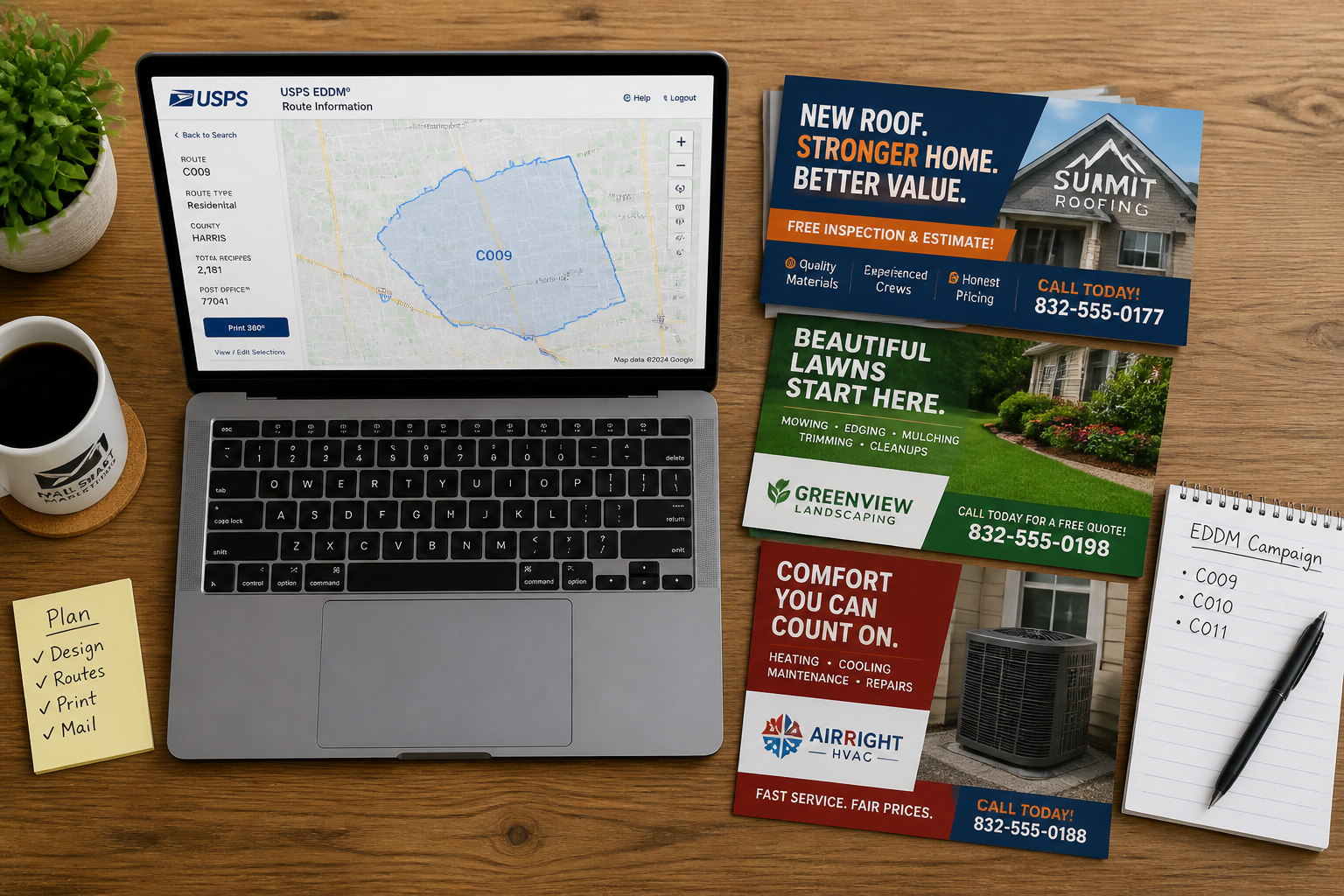
Direct mail remains a powerful channel for reaching local customers, but its effectiveness hinges on selecting the right strategy. Two primary approaches dominate this space: Every Door Direct Mail (EDDM) and targeted direct mail. While both leverage physical mail to engage prospects, their methodologies, cost implications, and suitability for different business objectives vary significantly. A clear understanding of these distinctions allows businesses to optimize their marketing spend and achieve measurable results.
Deciding between EDDM and targeted direct mail is not about identifying a single 'winner,' but rather about determining which method aligns best with specific campaign goals, audience characteristics, and budget constraints. This comparison will delve into the core operational differences, evaluate their respective strengths in terms of cost per lead and audience precision, and provide guidance on when saturation mail, like EDDM, can be the most effective play for your marketing objectives.
Understanding Every Door Direct Mail (EDDM)
Every Door Direct Mail, or EDDM, is a service offered by the USPS designed for local businesses to send postcards to every address within selected postal carrier routes. It's a saturation mail approach, meaning mailers are delivered to all residential or business addresses in a chosen area, without individual addressing. This method simplifies the mailing process by eliminating the need for a mailing list or postage permits, significantly reducing preparation time and cost.
The primary appeal of EDDM lies in its cost-efficiency for broad geographic reach. Businesses select routes based on demographic data available through the USPS tool, such as average household income or age range, providing a foundational level of targeting. The mail pieces themselves are often oversized postcards, designed to stand out in a mailbox and convey a simple, direct message. EDDM is particularly well-suited for businesses with a universal appeal or those seeking to establish a strong local presence within a defined service area.
Odd Jobs Media produces EDDM-compliant postcards, ensuring they meet USPS specifications for size and weight. This simplifies the process for businesses, allowing them to focus on their message while we handle the print requirements. The streamlined nature of EDDM means campaigns can be deployed relatively quickly once the design is finalized and routes are selected.
The Precision of Targeted Direct Mail
Targeted direct mail, in contrast to EDDM, involves sending mail pieces to a specific list of individuals or businesses based on detailed demographic, psychographic, or behavioral criteria. This approach requires the acquisition or compilation of a mailing list, which can be purchased from data providers or built from existing customer databases. Each mail piece is personalized with the recipient's name and address, often leading to higher open and response rates due to its perceived relevance.
The power of targeted direct mail lies in its ability to reach ideal prospects with highly customized messages. For example, a luxury car dealership might target households with high disposable incomes and a history of luxury vehicle ownership. A B2B software company might target specific job titles within industries known to use their type of product. This precision allows for greater personalization in messaging and offers, which can translate to a higher return on investment per mailed piece, even if the per-piece cost is higher than EDDM.
Developing effective targeted direct mail campaigns requires a deeper understanding of the target audience and access to reliable data. While more involved in its setup, the ability to speak directly to specific needs and interests can significantly improve conversion rates. Businesses often combine targeted direct mail with other marketing channels, such as email or digital ads, to create multi-touch campaigns for maximum impact.
Cost Per Lead: A Critical Comparison
When evaluating marketing channels, cost per lead (CPL) is a key metric. For EDDM, the CPL can be very low if the product or service has broad appeal within the selected routes. The per-piece postage cost is generally lower than standard bulk mail rates, and the absence of list acquisition and addressing costs contributes to this efficiency. However, the CPL can increase if a significant portion of the recipients are not potential customers, as marketing materials are sent to every door regardless of individual relevance.
Targeted direct mail often has a higher per-piece cost due to list acquisition, personalization, and potentially higher postage rates for smaller, more specific mailings. However, its CPL can be lower than EDDM if the targeting is highly effective. By focusing only on individuals most likely to convert, businesses avoid the waste associated with mailing to unqualified prospects. A campaign with a 2% response rate from a highly targeted list might yield a lower CPL than a 0.5% response rate from an EDDM campaign, even if the EDDM pieces were cheaper to produce.
Ultimately, the 'better' option for CPL depends on the business model and target audience. For businesses with a broad appeal (e.g., local restaurants, dry cleaners, home services), EDDM can deliver an excellent CPL. For niche markets, high-value products/services, or highly segmented customer bases, the investment in targeted direct mail often results in a more favorable CPL due to higher conversion rates from qualified leads.
When Saturation Mail is the Smarter Play
Saturation mail, like EDDM, is the smarter play in several distinct scenarios. First, it is highly effective for businesses with a wide appeal that can benefit from increased local awareness and foot traffic. New businesses looking to announce their presence in a neighborhood or established businesses seeking to promote a new location or a widely applicable service (e.g., HVAC, plumbing, general dentistry) will find EDDM valuable. Its broad reach ensures maximum exposure within a geographical boundary, which is often crucial for local service providers.
Second, EDDM excels when promoting a general offer or event that is relevant to nearly everyone in a specific area. Think of a grand opening, a seasonal sale at a retail store, a community event, or a political campaign aiming for high voter turnout. In these cases, the objective is often maximum reach and awareness, rather than highly granular personalization. The cost-effectiveness of EDDM allows for larger print runs and broader distribution within a budget.
Finally, EDDM is ideal when a business has limited resources or data for compiling a targeted mailing list. Small businesses, in particular, may not have access to sophisticated demographic data or the budget for list acquisition. EDDM simplifies the process, allowing them to execute a direct mail campaign without the complexities of list management. This accessibility makes it a powerful tool for localized marketing efforts where the goal is to cast a wide net efficiently.
Frequently asked questions
- Can I combine EDDM with other marketing channels?
- Yes, absolutely. Integrating EDDM with digital ads, social media campaigns, or local newspaper advertising can amplify your message. Using consistent branding and calls to action across all channels creates a cohesive marketing presence and reinforces your message, leading to better overall campaign performance.
- How do I measure the effectiveness of an EDDM campaign?
- Measuring EDDM effectiveness involves tracking response rates. This can be done by including unique coupon codes, specific landing page URLs, or requiring recipients to mention the mailer for an offer. Monitoring foot traffic increases or website visits during and after the campaign also provides valuable insights into its impact.
- Is it possible to target specific demographics with EDDM?
- While not as granular as targeted direct mail, EDDM allows for basic demographic targeting. You can select postal routes based on average household income, age ranges, and other general characteristics provided by the USPS mapping tool. This helps align your mailers with areas more likely to contain your desired customer base, even without individual recipient data.