Direct Mail
Choosing Postcard Sizes for Direct Mail Campaigns
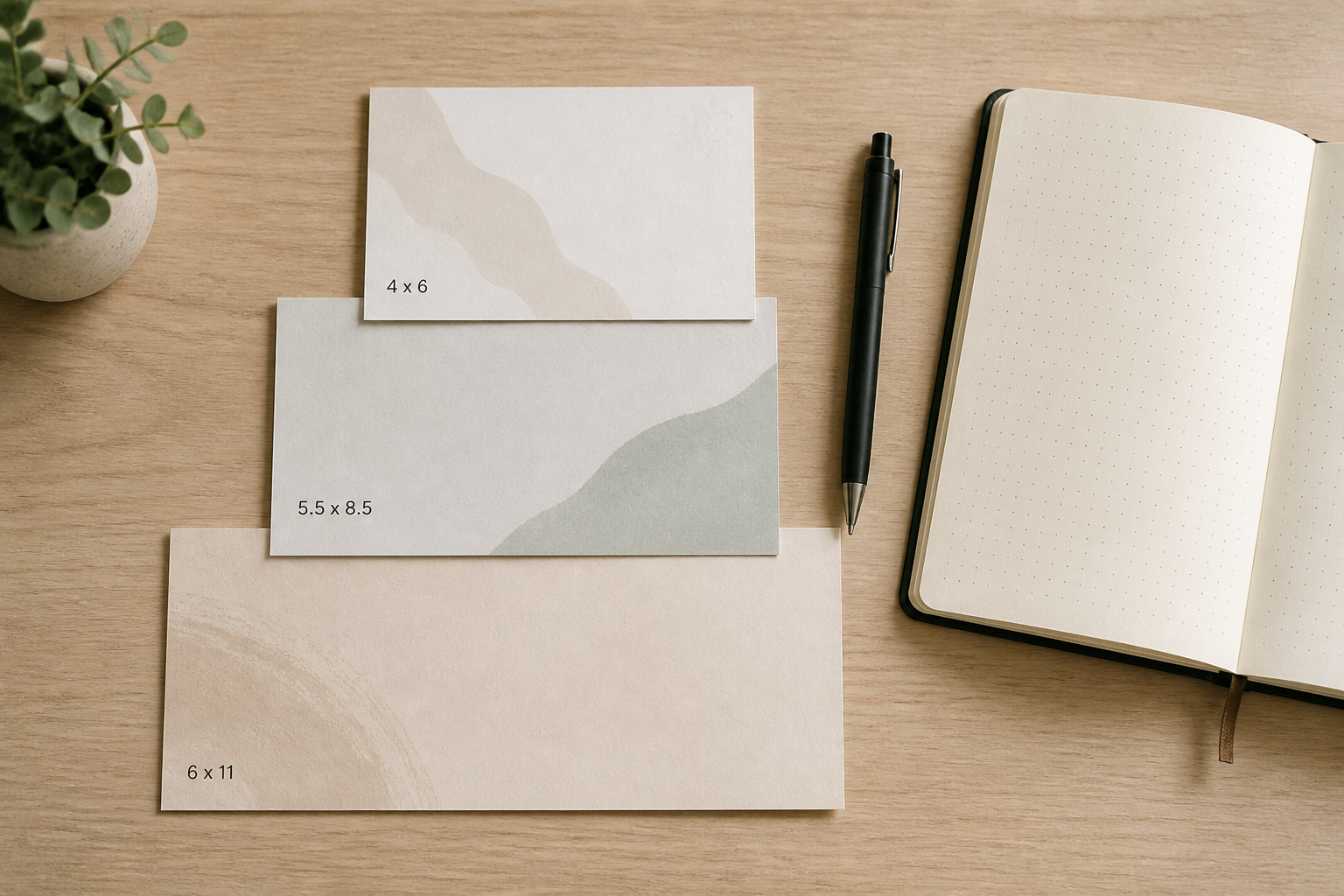
Direct mail remains a powerful channel for reaching specific audiences, and the humble postcard is often its workhorse. However, not all postcards are created equal. The physical dimensions of your mail piece significantly impact its visibility, perceived value, and ultimately, its response rate. Understanding these nuances is crucial for optimizing your marketing budget and achieving your campaign objectives.
Small business owners and marketing managers frequently face the decision of which postcard size to use. While options abound, three standard sizes consistently emerge: the compact 4x6, the versatile 5.5x8.5, and the commanding 6x11. Each size carries distinct advantages and trade-offs concerning cost, design flexibility, and deliverability. This article will break down these options, helping you determine which size is best suited to pull results for your next campaign.
The 4x6 Postcard: Economy and Simplicity
The 4x6 postcard is the smallest standard size and is often the most economical choice. Its primary advantage lies in its postage cost, which typically qualifies for the lowest First-Class Mail postcard rate through the USPS. This makes it an attractive option for businesses operating on tight budgets or for campaigns requiring broad reach with minimal cost per piece.
While cost-effective, the compact nature of the 4x6 postcard presents design challenges. Space for messaging is limited, demanding concise copy and impactful visuals. This size is best suited for single, clear calls to action (CTAs), such as announcing a quick sale, a new location, or a simple event reminder. It excels when the message is direct and requires little explanation. However, it can easily get lost in a stack of mail if not designed with strong visual appeal. Its smaller format also offers less room for branding elements, so brand recognition must be achieved through strong visual identity rather than extensive information.
The 5.5x8.5 Postcard: The Versatile Mid-Range
Stepping up in size, the 5.5x8.5 postcard, sometimes referred to as a half-page postcard, offers a significant increase in real estate over the 4x6. This additional space is often a sweet spot for many direct mail campaigns. It provides ample room for more detailed messaging, multiple product images, or a more sophisticated design layout, all while generally remaining within favorable postage rate categories for First-Class Mail flats or Marketing Mail. This balance of size and cost-effectiveness makes it a popular and versatile choice.
The 5.5x8.5 postcard allows for a stronger narrative. You can introduce a problem, present a solution, highlight benefits, and provide a clear CTA without feeling cramped. This size is ideal for promotional offers that require a bit more explanation, event invitations with schedules, or introducing new services that need more descriptive content. It is large enough to stand out in a mailbox, yet not so large as to incur significantly higher printing or postage costs compared to smaller formats. Its increased visual presence helps it avoid being overlooked amidst other mail pieces.
The 6x11 Postcard: Maximum Impact and Visibility
The 6x11 postcard is often considered the 'jumbo' or 'oversize' postcard. This dimension offers the largest canvas among standard postcard sizes, maximizing visibility in the mailbox. It commands attention simply by its physical presence, making it very difficult for recipients to ignore. While printing and postage costs will be higher than smaller options, the 6x11's ability to stand out can often justify the increased investment, particularly for high-value offers or target audiences.
With its substantial surface area, the 6x11 postcard provides unparalleled design flexibility. It can accommodate extensive messaging, multiple high-resolution images, detailed maps, testimonials, or even a mini-catalog of products. This size is particularly effective for campaigns requiring a strong visual statement, promoting complex services, showcasing a range of products, or driving attendance to significant events. It is a favored choice for industries such as real estate, automotive, and financial services, where conveying a professional and comprehensive message is paramount. When designed well, the 6x11 offers a premium feel that can elevate brand perception and elicit a higher response from a targeted audience.
Which Size Pulls Best and Why?
There is no single 'best' postcard size for all campaigns. The optimal choice depends entirely on your campaign objectives, target audience, budget, and the complexity of your message. However, generally speaking, larger postcards tend to achieve higher visibility and can facilitate more detailed communication, often leading to stronger response rates when compared on a direct, per-piece basis. The 6x11 size often pulls best for this reason: it's harder to miss, provides ample space for compelling content, and conveys a sense of importance.
However, "pulls best" can also be interpreted in terms of return on investment (ROI). A 4x6 postcard, with its lower cost, might yield a better ROI if the message is simple and the volume is high, even if its per-piece response rate is lower than a 6x11. The 5.5x8.5 often strikes the best balance for many businesses, offering good visibility and space at a more moderate cost. Ultimately, the best size is the one that allows you to clearly convey your message, capture attention, and drive the desired action from your specific audience within your budget constraints. It's not just about what is seen, but what resonates and prompts action.
Strategic Considerations Beyond Size
While size is a critical factor, it's one component of a successful direct mail campaign. The quality of your mailing list is arguably the most important element, ensuring your message reaches the right people. A highly targeted list will always outperform a generic one, regardless of postcard size.
Equally important are compelling design and copy. A large postcard with a weak design or confusing message will not perform well. Your headline must be engaging, your offer clear and attractive, and your call to action unmistakable. Consider the use of strong imagery, a logical layout, and a font that is easy to read. High-quality printing, including paper stock and finish, also contributes to the perceived value and professionalism of your mail piece. At Odd Jobs Media, we advise clients to focus on the holistic impact of their direct mail, not just one isolated attribute. A well-executed campaign integrates size, design, list quality, and offer seamlessly.
Frequently asked questions
- Does postcard size affect postage cost?
- Yes, postcard size directly affects postage cost. Smaller postcards (e.g., 4x6) often qualify for lower First-Class Mail postcard rates. Larger postcards (e.g., 5.5x8.5, 6x11) typically fall into First-Class Mail flat or Marketing Mail categories, which have higher per-piece postage rates.
- Can I use a custom postcard size?
- Yes, you can use custom postcard sizes. However, deviating from standard sizes often means you will not qualify for the most favorable USPS rates, potentially incurring higher postage costs. It is essential to consult USPS regulations for non-standard mail pieces before committing to a custom size.
- How can I make a small postcard stand out?
- To make a small postcard stand out, focus on bold, high-contrast design, a single clear message, and a strong, concise call to action. Use captivating imagery, a unique texture, or a compelling offer to grab attention quickly. The goal is immediate impact despite limited space.
- Should I test different postcard sizes?
- Testing different postcard sizes is a smart strategy to optimize your direct mail campaigns. A/B testing allows you to compare the performance of two different sizes with the same messaging and offer, helping you identify which dimensions yield the best response for your specific audience and objectives. This data-driven approach can significantly improve ROI.