Marketing Materials
Brochure Design That Captivates and Converts
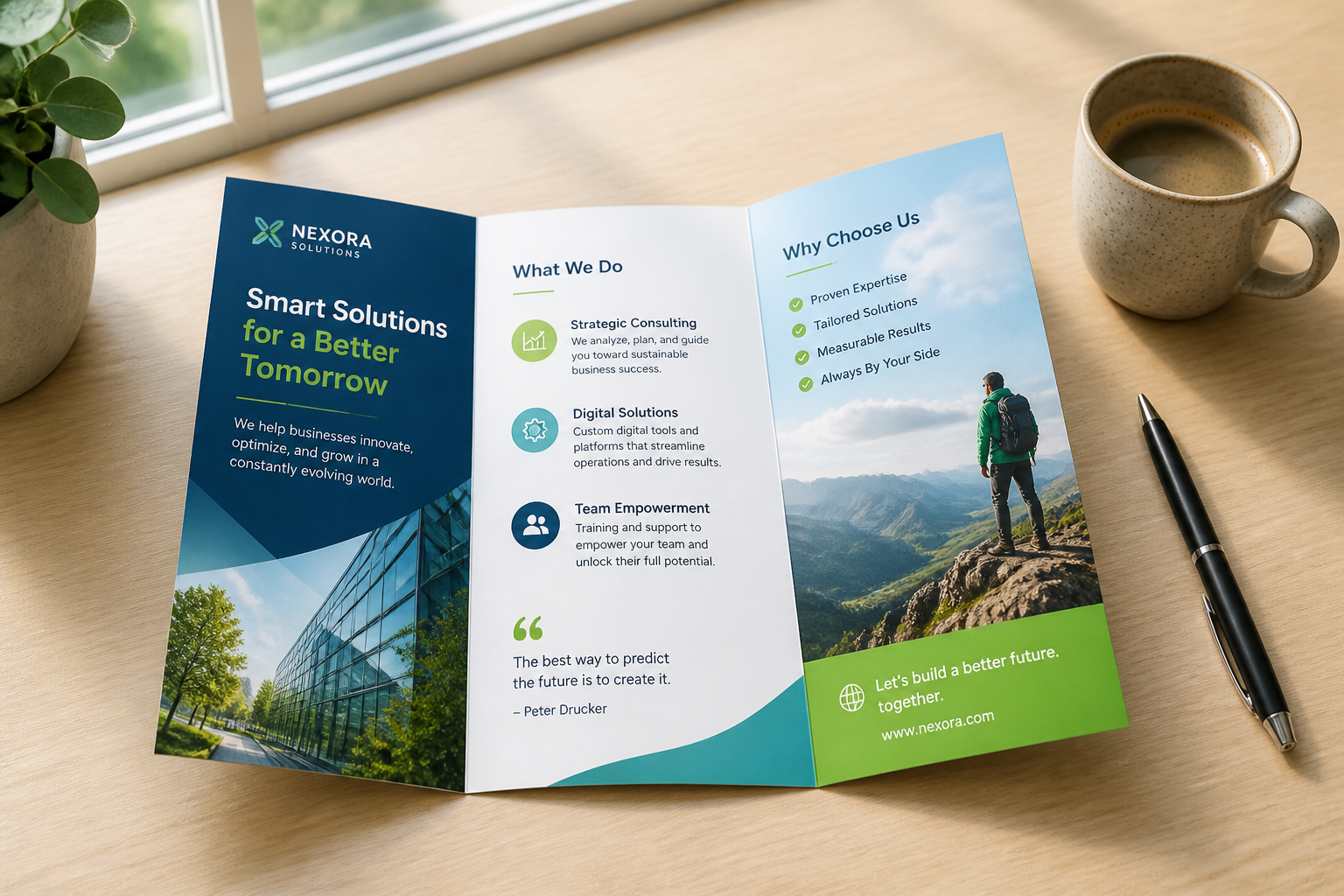
In a digital-first world, a well-designed brochure remains a powerful, tangible marketing tool. It offers a unique opportunity for direct, focused communication, allowing you to tell a more complete story than a business card, and often, with more detail than a flyer. However, the effectiveness of a brochure isn't just about what it says, but how it's presented. A brochure tossed aside is a missed opportunity; one that's picked up, read, and acted upon is an invaluable asset.
Designing a brochure that truly resonates requires more than just attractive graphics. It demands a clear strategy, a logical flow of information, and persuasive calls to action that guide the reader toward a desired outcome. This guide will walk you through the essential elements of creating a brochure that not only grabs attention but also delivers your message effectively and drives results for your business.
Define Your Brochure's Purpose and Audience
Before you even consider design elements, clarify your brochure's primary objective. Is it to generate leads, provide detailed product information, announce a new service, or reinforce brand identity? Your purpose will dictate the content, tone, and overall structure. Alongside this, identify your target audience. Who are they? What are their pain points? What information do they need to make a decision? Understanding your audience will help you tailor the message and imagery to their specific interests and needs.
A brochure distributed at a trade show, for instance, might be concise and highlight key differentiators to pique interest, whereas one mailed directly to potential clients could offer more in-depth information and case studies. For businesses using EDDM postcards as a first touch, a follow-up brochure can elaborate on the initial message. Knowing where and how your brochure will be used is fundamental to its strategic success.
Craft a Compelling Narrative with Panel Flow
A brochure isn't just a collection of facts; it's a story. The way information unfolds across its panels is crucial for engagement. Consider how a reader naturally processes information. For most standard trifold or bifold brochures, there's an expected progression. The front panel needs to be captivating, acting as a mini-billboard that entices the reader to open it. It should state a clear benefit or ask a compelling question.
The interior panels should then logically expand on the front, introducing your solution, detailing benefits, and providing supporting information without overwhelming the reader. Think about leading the eye from left to right, or from a problem to its solution. Use headlines, subheadings, and bullet points to break up text and improve readability. For multi-panel designs, like a z-fold or gatefold, ensure each opening reveals new, relevant information, building anticipation and guiding the reader deeper into your message.
Poor panel flow can lead to confusion and disinterest. Ensure smooth transitions between sections and a clear visual hierarchy that emphasizes key points. Quality printing, like the options available at Odd Jobs Media, ensures your thoughtful layout translates perfectly to a tangible product, maintaining visual integrity.
Content: Quality Over Quantity
Every word in your brochure should earn its place. Avoid jargon, marketing buzzwords, and overly complex sentences. Focus on clear, benefit-driven language that speaks directly to your audience's needs and desires. Instead of listing features, explain how those features solve a problem or improve their situation. Use active voice and concise phrasing to maintain reader interest. People scan before they read, so make sure your headlines and subheadings are informative and engaging.
High-quality imagery is just as important as text. Professional photos that illustrate your product, service, or team can convey trustworthiness and professionalism. If using graphics, ensure they are relevant and support your message, not distract from it. Consistent branding—colors, fonts, and logos—across all panels reinforces your identity. This attention to detail extends to the final print quality, where professional output from a commercial print shop like ours ensures your design looks as intended.
Integrate Strong, Clear Calls to Action (CTAs)
The most beautifully designed brochure is ineffective if it doesn't prompt the reader to take the next step. Your calls to action must be unambiguous and visible. What do you want the reader to do? Visit your website? Call for a consultation? Scan a QR code? Make an appointment? Sign up for a newsletter? Provide all necessary contact information clearly and prominently, including phone number, email, website, and social media handles. Ensure QR codes lead to functional, mobile-optimized landing pages.
Placement of your CTA is critical. It should typically appear on the back panel, the final interior panel, or both, as the logical conclusion of your narrative. Avoid overwhelming the reader with too many CTAs; usually one primary action and perhaps one secondary option is sufficient. Make the benefit of acting clear. For instance, instead of "Call us," try "Call for a free consultation" or "Visit our website to see our full catalog." Providing clear next steps is essential for converting interest into action.
Frequently asked questions
- What is the most effective brochure size and fold for a small business?
- For most small businesses, a standard 8.5" x 11" trifold or bifold brochure is highly effective and cost-efficient. Trifolds offer six panels for information, ideal for showcasing services or products, while bifolds provide four larger panels, suitable for more visual content. The choice often depends on the amount of information you need to convey and the visual emphasis desired.
- How important is paper quality for a brochure?
- Paper quality significantly impacts how your brochure is perceived. A heavier, coated stock (like 100lb gloss text or cover stock) feels more substantial and professional, enhancing the perceived value of your message. It also improves print quality, making colors more vibrant and text sharper. Investing in quality paper elevates your brand's image and suggests attention to detail.
- Should I include pricing in my brochure?
- Including pricing depends on your business model and objectives. For some services or highly customizable products, detailed pricing might be impractical or quickly outdated. In such cases, it's better to guide customers to a website or consultation for pricing. For straightforward products with stable pricing, including it can simplify the buying decision. Consider whether providing pricing upfront aligns with your sales process and how much information your target audience needs to make a decision.